Algo trading in India is no longer limited to institutions or quant funds. Retail traders can use software to build, test and automate rule-based strategies, including through no-code platforms.
Algorithmic trading uses predefined rules to generate orders automatically. It can reduce manual work, but it does not remove trading risk or the need to monitor execution.
This guide covers:
What algorithmic trading means and how it works
Its use across equities, F&O, commodities and crypto platforms
SEBI’s retail algo framework and NSE’s static IP requirements
How to get started step by step
How to test strategies and manage execution risks
What is Algo Trading?
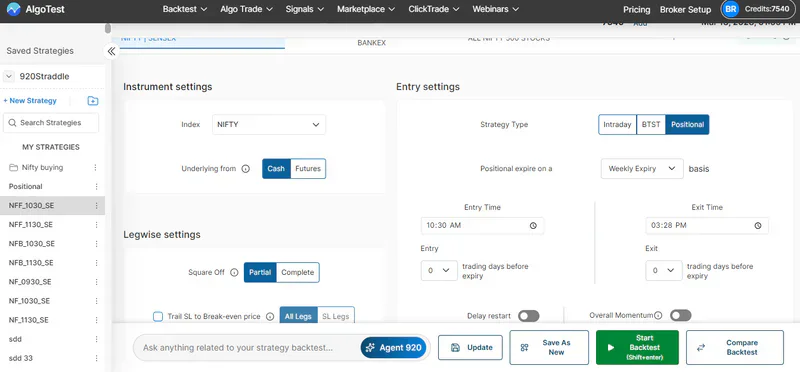
Algo trading, or algorithmic trading, uses predefined rules to generate and submit trading orders automatically.
Instead of placing each order manually, you:
Define entry conditions
Set exit rules
Add risk management
Decide position sizing
For example, a strategy might enter when a price crosses a specified level and exit when a stop-loss or target condition is met. The software follows those instructions, subject to the platform’s capabilities and broker controls.
Automated trading is used across equity and derivatives markets on NSE and BSE, commodities on MCX, and crypto platforms. Supported instruments and execution arrangements vary. Crypto trading operates under a separate market and regulatory context; NSE’s retail algo rules should not be assumed to apply to it.
Platforms such as SurendraAlgo let traders configure supported strategies without writing code. Order submission and execution still depend on connectivity, broker processing, exchange systems and available liquidity. Automation does not guarantee an immediate fill or a particular price.
Start backtesting on SurendraAlgo.
How Algo Trading Works
An algo setup has four main components:
Strategy logic: Entry conditions, exit conditions, position sizes and risk parameters define what the system should do.
Market data: Prices, option chain updates and indicator values supply the inputs used to evaluate those conditions.
Broker connection: An API connects the trading software to the broker. The broker applies relevant checks and routes accepted orders to the exchange.
Risk controls: Position limits, stop-loss rules and other safeguards help manage exposure. They cannot guarantee that losses stay within a chosen amount during gaps, illiquidity or technical failures.
Automation can reduce the time spent entering orders manually. Its usefulness depends on the quality of the rules, data and execution arrangement, rather than speed alone.
Related: How to Do Algo Trading in India — Step-by-Step Guide.
Is Algo Trading Legal in India?
Yes. Retail algo trading is permitted in India, subject to applicable SEBI, exchange and broker requirements. SEBI issued its retail algo framework on 4 February 2025. The framework became applicable to all brokers from 1 April 2026 following the implementation extensions.
The requirements depend on how an algo is developed, hosted and connected to the broker:
Broker and provider roles: Brokers act as the principal and algo providers as their agents under the API framework. Providers offering algo order facilities must be empanelled with the relevant exchanges. Brokers retain responsibilities for oversight and investor grievances.
Order tagging: API orders require exchange-prescribed identification. Registered algos use assigned identifiers; eligible orders within the specified threshold use standardised tagging. Tagging is different from registering an individual strategy.
Self-developed algos: For tech-savvy retail investors developing their own algos using programming knowledge, individual registration is required through the broker when the specified threshold is exceeded. NSE’s implementation standards specify 10 orders per second per exchange. Staying within the threshold does not remove eligibility, security or risk-control requirements.
Static IP and hosting: A tech-savvy investor using a client-direct API needs a client static IP. For an empanelled provider’s platform hosted on the broker’s infrastructure, NSE’s FAQ identifies the broker server’s static IP as the relevant address. Every platform user should not automatically be told to buy a personal static IP.
White box and black box algos: SEBI distinguishes disclosed, replicable logic from logic that is not known to the user and is not replicable. Providers offering black box algos must also register as Research Analysts and maintain the required research reports.
What NSE’s November 2026 Static IP Circular Adds
NSE’s circular NSE/INSP/77559, dated 20 November 2026, applies with immediate effect. It reiterates that the client-side static IP route is intended for retail investors who develop their own algos using programming knowledge. Brokers and providers must not give that access to clients who do not meet the category’s requirements.
Brokers registering such clients must obtain an undertaking confirming eligibility. The undertaking also addresses the absence of recourse to the Exchange’s Investor Grievance mechanism for losses caused by the logic of the client’s own algo. This is not a blanket statement about every possible complaint.
Read the official NSE circular and our explanation of the NSE static IP circular for tech-savvy retail investors.
Before deploying, confirm your actual arrangement with your broker: who developed the algo, where its logic runs, whose IP is registered, and which approvals or declarations apply. Using a no-code builder or owning a static IP does not, by itself, establish eligibility for the tech-savvy client route.
Related: Is SEBI Banning Algo Trading? What Retail Traders Need to Know.
Algo Trading vs Manual Trading
Both approaches can use systematic rules and research. The main difference is how decisions become orders.
Traders can combine the two: automate repeatable tasks while retaining supervision and a manual fallback.
Read more: Manual Trading vs Algo Trading.
Benefits of Algo Trading
Less discretionary intervention: Predefined rules can reduce decisions driven by fear or greed.
Consistent rule application: Entry, exit and sizing conditions can be applied systematically.
Less manual order handling: Automation reduces repetitive work and manual entry delays.
Testing before deployment: Historical testing helps examine how a strategy behaved under past conditions.
More efficient monitoring: Logs and dashboards help track strategy activity, although supervision remains necessary.
Multiple-strategy workflows: Software can manage several strategies while you monitor their combined exposure.
These are process benefits, not a promise of improved returns.
Check out 10 Best Algo Trading Software in India — Free and Paid Tools Compared.
Risks of Algo Trading and How to Manage Them
Systematic trading does not eliminate risk. Algo trading changes how risks arise and how you manage them.
Overfitting
A strategy may look strong in backtests because it has been excessively adjusted to fit historical data. That performance may not hold up in live markets.
How to manage it: Use out-of-sample testing on data that was not used to develop the strategy. A significant performance drop is a reason to investigate its robustness.
Technology Failure
Broker APIs can fail, servers can restart, and market data can lag, including during peak trading activity.
How to manage it: Have a manual fallback through your broker. Know how to check open positions, cancel pending orders and exit trades if automation becomes unavailable.
Market Regime Change
A strategy designed for trending markets may struggle when prices move sideways. Changes in volatility can also affect performance.
How to manage it: Compare live results with historical expectations. Persistent deviations should trigger a review before you commit more capital.
Overleveraged Multi-Strategy Setups
Running several algos can create hidden exposure, particularly when strategies respond similarly to market movements.
How to manage it: Monitor combined positions, leverage and potential losses across strategies. Different strategy names do not necessarily mean diversified risk.
Stopping Mid-Drawdown
Switching a strategy off after every losing streak can undermine a planned approach. However, continuing indefinitely in the hope of recovery can also increase losses.
How to manage it: Define acceptable drawdown, review triggers and stopping rules before deployment. Follow those rules and reassess when limits are breached; recovery is never guaranteed.
Read more: 5 Algo Trading Mistakes Retail Traders Make.
How to Start Algo Trading in India
Step 1: Learn the instrument first. Understand how the instrument is priced, its lot size, leverage, margin and settlement. Automate only a strategy whose behaviour you understand.
Step 2: Pick a broker that supports your execution arrangement. Check its API or platform integration, onboarding requirements and support process. Confirm the applicable client category, hosting and IP requirements before deployment.
Step 3: Choose a suitable platform. Compare backtesting, paper trading, a no-code builder and broker connectivity. Check that the platform supports your instrument, strategy rules and intended order workflow.
Step 4: Start with clear rules. Use a strategy you can explain and inspect. A simple-looking options position can still carry substantial risk, so simplicity should mean understandable behaviour rather than an assumption of safety.
Step 5: Backtest across different conditions. Examine trending, range-bound and volatile periods. Include realistic costs and slippage assumptions. There is no universal number of trades or years that makes a strategy reliable.
Step 6: Paper trade before committing capital. Observe how signals and configured rules behave with incoming market data. Simulation does not reproduce every real fill, queue position, rejection or connectivity problem.
Step 7: Evaluate live deployment carefully. If you decide to proceed, size positions according to current margin requirements and the loss you can afford. There is no fixed starting capital suitable for every F&O strategy. Check actual fills and costs against your assumptions.
Step 8: Monitor and review. Check order errors and open positions during trading, and review performance periodically. Investigate unexpected behaviour before increasing exposure.
Check out 5 Best Algo Trading Courses in India.
Best Brokers for Algo Trading in India
Your broker handles essential parts of order processing and risk management. Evaluate the entire workflow, including:
API reliability: Review documentation, service updates, error handling and support availability.
Permitted order types: Confirm which types are allowed for your exchange, segment and algo arrangement. Do not assume that every order type available for manual trading is available through an algo.
Integration and onboarding: Check whether your chosen platform and intended execution route are supported.
Total costs: Compare brokerage, API fees, platform charges and other applicable trading costs.
Margin requirements: Check the margin needed for the complete position and how it changes if a hedge is missing or an order is rejected.
API response times: Use OpenBroker by SurendraAlgo to compare reported API response times. An API response is not the same as an exchange fill, and a single low latency reading does not establish overall execution quality.
Confirm current broker and segment support for the specific SurendraAlgo feature you plan to use.
Related: Best Brokers for Algo Trading in India — Detailed Comparison.
Algo Trading Platforms: How to Choose
Compare platforms against your intended workflow, rather than selecting one on price or backtest returns alone.
Data granularity matters. Daily prices cannot reveal the full sequence of intraday option prices, while finer data still requires assumptions about fills and costs. No dataset guarantees that a backtest will match live trading.
Review SurendraAlgo’s pricing breakdown for current plans and usage charges.
Learn more: How to Backtest Options Strategies in India.
Types of Algo Trading Strategies in India
1. Trend Following
Trend-following strategies use rules such as breakouts or moving-average crossovers to trade in the direction of price movement. They can struggle with repeated reversals in sideways markets.
Read more: Swing Trading Strategies in Algo Trading.
2. Mean Reversion
Mean-reversion strategies look for a return towards a reference level after a price deviation. A persistent trend can cause losses when the expected reversal does not occur.
3. Options Selling Strategies
Strategies such as short straddles, strangles and iron condors can seek to benefit from time decay or changes in volatility. Their risks differ substantially depending on hedges, sizing and market movement. Options selling does not inherently guarantee a high win rate or limited losses.
Read more: How to Choose an Option Selling Strategy Based on Market Conditions.
4. Options Buying Strategies
Buying calls or puts can express a directional view through momentum or breakout rules. Time decay and changes in implied volatility affect results, even when the underlying moves in the anticipated direction.
5. Intraday and Scalping
Intraday systems open and close positions within the session. Scalping typically seeks smaller price movements, making costs, liquidity and execution especially important.
Read more: 5 Best Indicators for Intraday Trading.
6. Momentum Strategies
Momentum strategies select instruments showing price strength or weakness, sometimes alongside volume filters. Sharp reversals and gaps are important risks to test.
7. Volatility-Based Strategies
These strategies use measures such as implied or realised volatility to guide entries and exits. High implied volatility alone is not sufficient justification for selling options; an event can produce a larger move than expected.
8. Multi-Strategy Portfolios
Combining strategies can reduce dependence on one approach, but correlations can increase during stressed markets. Evaluate combined exposure and drawdowns rather than assuming that more strategies mean less risk.
Why You Should Backtest and Paper Trade Algo Trading Strategies
Backtesting helps you examine a trading idea before committing money. It provides evidence about past behaviour under stated assumptions, not a prediction of future returns.
Review these metrics together:
CAGR: Annualised compounded growth, where the calculation is appropriate. Check the capital and reinvestment assumptions behind it.
Maximum drawdown: The largest historical peak-to-trough decline. Future drawdowns can be larger.
Sharpe ratio: Excess return relative to return variability. Its usefulness depends on the calculation period and assumptions.
Win rate and payoff ratio: Consider how often trades win alongside average gains, average losses and costs.
Number and distribution of trades: Look for evidence across different periods and conditions. A small or concentrated sample can be misleading.
Three Common Backtesting Mistakes
1. Overfitting: Repeatedly changing parameters to improve historical results can fit noise instead of a durable pattern. Keep separate data for validation.
2. Ignoring slippage and costs: A simulated entry or exit price may be unavailable in live trading. Test sensitivity to less favourable fills, especially in less liquid options.
3. Testing only one market condition: A strategy developed during a trend may behave differently in a sideways or volatile market. Test a range of conditions and inspect periods of poor performance.
Related: How to Backtest Algo Trading Strategies: Intraday, BTST, Positional and More.
Final Step: Paper Trading
Paper trading runs a strategy in a simulated environment using incoming market data. It helps you observe signals, timing and configured rules without placing real-money trades.
It does not establish how real orders will fill or reproduce every execution delay, partial fill and rejection. Treat paper results as another testing stage, and investigate discrepancies before considering deployment.
Read more: Best Paper Trading Websites in India.
Algo Trading for F&O and Why SurendraAlgo is Built for It
Options strategies can involve several contracts, changing premiums and margin requirements. Automation helps organise those rules and orders, while the trader remains responsible for understanding the position and supervising it.
Why Timing Matters in F&O
Prices can change between the submission and execution of an order. In a multi-leg position such as an iron condor, one leg may fill before another, or a leg may be rejected. Automated submission does not guarantee simultaneous execution of the complete position.
Check current contract specifications before deploying. Expiry schedules, available contracts and lot sizes can change; do not carry an old weekly-expiry assumption into a new strategy.
New to options trading? Start with our options basics guide.
What SurendraAlgo is Built For
One Thing to Watch
Liquidity varies across strikes and expiries. Wide bid-ask spreads and limited depth can make realised prices differ from a backtest. Review the permitted order types and how the system handles an unfilled leg. Limit orders control the acceptable price but do not guarantee execution.
Keep Performance Claims in Context
Backtests, paper results and live performance measure different things. Compare results only when their periods, costs, capital assumptions and calculation methods are clear. Neither automation nor historical profitability guarantees future returns.
What is an Algo Strategy Marketplace?
An algo strategy marketplace lets traders explore ready-built strategies rather than create every rule themselves.
Before choosing a strategy, review the available methodology, risk parameters, costs and performance information. Check whether displayed results are backtested, simulated or live, and whether you can independently test the strategy.
SurendraAlgo’s RA Algos features strategies from SEBI-registered Research Analysts. An analyst’s registration is distinct from exchange algo registration and does not mean SEBI has approved a strategy’s returns.
When evaluating a marketplace strategy, check:
Creator details: The analyst’s identity and registration information
Available disclosures: What is explained about the strategy, its risks and limitations
Testing options: Whether you can backtest or forward test the strategy before deployment
Execution and fees: The supported broker arrangement, required capital and applicable charges
SurendraAlgo also offers a crypto trading workflow. Check the supported venue, instruments and feature availability separately from Indian securities-market arrangements.
Explore crypto trading on SurendraAlgo.
How AI is Changing Algo Trading in India

AI can help translate ideas into rules, compare tests and organise research. It does not establish that a strategy is profitable or suitable for live trading.
SurendraAlgo’s documented AI features serve different purposes:
Signals AI: Builds indicator-based strategies from a plain-English description.
Agent 920: Analyses time-based strategies, runs backtests and compares variations with costs.
SurendraAlgo MCP: Makes SurendraAlgo market data available within a compatible AI assistant.
Review the AI on SurendraAlgo documentation to understand each workflow.
AI can speed up experimentation, but testing more variations can also increase overfitting. Inspect generated rules, verify assumptions and validate on data that was not used to develop the strategy. AI assistance alone does not determine your regulatory client category or execution requirements.
Conclusion
Algo trading in India gives retail traders a way to build repeatable trading processes. Its value comes from clear rules, careful testing and reliable supervision.
Before going live, understand the strategy’s risks and confirm the applicable broker, hosting, IP and registration requirements. Backtesting helps evaluate a trading idea; it does not establish regulatory compliance or guarantee returns.
Explore algo trading in India with SurendraAlgo and create an account to start testing.
Frequently Asked Questions
Is Algo Trading Legal in India?
Yes, subject to applicable SEBI, exchange and broker requirements. The arrangement matters: self-developed client algos, broker algos and provider offerings do not all follow identical registration or hosting requirements. Read our explanation of SEBI’s retail algo trading rules.
Does Every Algo Trader Need a Personal Static IP?
No. NSE distinguishes the tech-savvy client-direct API route from a provider’s platform hosted on broker infrastructure. Confirm which arrangement applies before buying an IP. See the NSE static IP circular explained.
How Much Capital Do I Need?
There is no single amount suitable for every strategy. Capital needs depend on the instrument, lot size, margin, position structure and potential losses. Check current requirements and allow for costs and adverse market moves.
Can Beginners Do Algo Trading in India?
Beginners can learn strategy building and testing, including through no-code tools. Understanding the instrument and the strategy’s risks should come before live deployment. Read Algo Trading for Beginners — Where to Start.
Do I Need to Know Coding?
Not for supported strategies built using a no-code interface. However, no-code use does not automatically qualify someone as a tech-savvy investor developing their own algo using programming knowledge.
What is the Best Strategy for Algo Trading in India?
There is no universal best strategy. Evaluate rules against your instrument, costs, capital and risk limits, using historical and forward testing. Explore options trading and algorithmic strategies.
Is Algo Trading Profitable in India?
It can produce profits or losses. Results depend on the strategy, execution, costs and market conditions. Backtested profitability does not establish future profitability. Read our guide to building and testing an algo trading strategy.
What if My Algo Places an Unexpected Trade?
Check the broker’s actual positions and orders, pause the relevant automation where possible, and use your broker’s controls to manage exposure. Cancelling an order and closing a filled position are different actions. Learn the controls for the product you use, including the ClickTrade Position Dashboard.
This article is for general information and is not investment or legal advice. Refer to official circulars and your broker’s instructions for requirements applicable to your account.